Showing posts with label Lesson Plan. Show all posts

Sunday, July 28, 2019

The Thief of Always Breakout

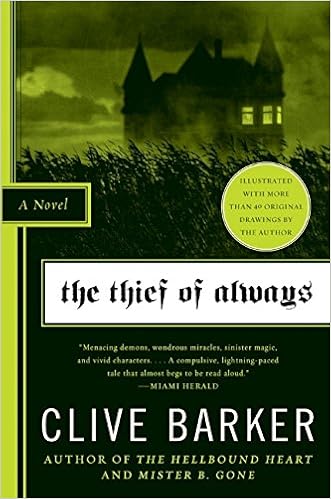
Looking for a great read aloud for your upper elementary or middle school students? The Thief of Always is a great book that the kids love! It's creepy and thrilling, but also filled with great themes. 

Escape rooms are becoming more popular both in and out of the classroom. On weekends, people take their friends and families to escape rooms for fun. In the classroom, escape rooms are also becoming trendy.  BreakoutEdu has digital breakouts that involve critical thinking skills.  There are even Breakout kits where students can unlock and crack codes. Since The Thief of Always involves the main character being trapped inside and eventually escaping the Holiday House, I wanted to create an escape room that involved the book.

My school district follows the Lucy Calkins curriculum, and this story is the read aloud for Lucy Calkins 5th Grade Unit 4: Fantasy Book Clubs: The Magic of Themes and Symbols.  After reading aloud the book to my class, I planned a breakout room in which students have to escape the Holiday House, the main setting in the book. I used skills from Lucy Calkins' Learning Progressions for this breakout.  Students also use math, art, and critical thinking to solve the problems.

The breakout includes the following educational skills:

  • Themes
  • Character Traits
  • Author's Craft
  • Setting
  • Perspective
  • Internal & External Quests
  • Converting Time
The clues also involve:
  • Emoji Code
  • Riddles
  • Decoding
  • Sketching
Below, you can see a Twitter post in which students are engaged in the challenge:
The full breakout is available for purchase on DiPasqua Education's Teachers Pay Teachers page. The package includes:

  • Lesson Plan with Breakout Directions
  • Answer Key
  • Student Map
  • Student Answer Recording Sheet
  • Breakout Clues
  • Hint Cards
  • Room Labels
  • Escape Cards
Here's how it works:

I printed out and laminated all the materials. I sorted each of the challenges into folders, and labeled them with the appropriate room label. I acted as Mrs. Griffin, dressed in an apron, baring the "Mrs. Griffin" name tag.

I paired students in groups. This challenge can also be done in partners. Each group received a sheet to record answers, and a map.  All students started with a folder containing the first challenge. Once students solved the first challenge, they came to me -- Mrs. Griffin -- to check their answer. If their answer was correct, that room on the map was stamped. They also received the folder for the next challenge. If their answer was incorrect, students kept working until they obtained the correct answer.  Students kept working until they advanced through each of the rooms.

Students had opportunities to move to a different room if they were stuck. Before the breakout started, each group received a "Hall Pass" card, and with the help of the cats from the book, could move to another room. Students could redeem the card only once, so they were advised to use it only if they were really stuck. Students could also earn a "Hint Card" by completing bonuses for certain challenges. 

If I noticed that groups were moving too quickly, I gave an individual from that group (typically the one giving the most help) a "Feast Card" so that they would have to sit out two minutes to "enjoy a meal" with Mrs. Griffin, since that was another big idea in the book.  This allows other groups to catch up.

Once students solve all the riddles and get all their rooms on their map stamped, they breakout, right? Well, that's not 100% the case. Students then are asked to help another group escape. Just like Harvey went back into the House to help others escape, students are asked to do the same thing. When they help one group breakout, then they have officially escaped.

Students seemed to really enjoy the breakout. It is a change of pace from other regular activities.

If you purchase The Thief of Always Breakout, please leave feedback so we can improve for future updates!

Thursday, August 11, 2016

Lesson Plan: Interpreting Remainders

Interpreting Remainders "DIRT" Anchor Chart
This lesson is intended for 4th grade Everyday Math, but can be translated to other math programs and grade levels.   The lesson is broken into different parts. The lesson starts with an anticipatory set, a warmup problem, minilesson, and then breaks into math centers (guided practice, partner work, independent).

Lesson: 6-8 Expressing and Interpreting Remainders

Objective: Students explore different ways to express and interpret remainders.

CCSS: 4.NF.1, 4.NF.2, 4.OA.3, 4.NBT.6, SMP1, SMP6

Warm-Up: Read Aloud: A Remainder of One, by Elinor J. Pinczes

Wednesday, August 10, 2016

Lesson Plan: Distributive Property

Distributive Property game has been updated and
is available on TSN's Teachers Pay Teachers Page
This lesson utilizes enVision Math, but ideas can be adapted for other texts.  Many of the hyperlinks will direct you to a place to download the resources used throughout this lesson. (Note: You must have ActivInspire downloaded to view the Promethean Board slides)

Lesson: 3.5 Distributive Property
Subject: Math
Grade: 5th

Integration of Learning Outcomes: Students will be able to use the Distributive Property to simplify expressions and solve equations by constructing viable arguments and critiquing the reasoning of others, looking for and making use of structure, looking for and expressing regularity in repeated reasoning.

Standards
· 5.NBT.5: Fluently multiply multi-digit whole numbers using the standard algorithm.
· 5.OA.1

Tuesday, July 12, 2016

Lesson Plan: Multiplication Properties

Front of Properties Foldable
This lesson utilizes enVision Math, but ideas can be adapted for other texts.  Many of the hyperlinks will direct you to a place to download the resources used throughout this lesson. (Note: You must have ActivInspire downloaded to view the Promethean Board slides)

Lesson: 3.1 – Multiplication Properties
Subject: Math
Grade: 5th

Integration of Learning Outcomes
· Students will be able to identify and apply Commutative, Associative, Identity, and Zero Properties of Multiplication by reasoning abstractly and quantitatively, constructing viable arguments and critiquing the reasoning of others, looking for and making use of structure, and looking for and expressing regularity in repeated reasoning.

Standards
· 5.NBT.6: Use strategies based on place value, the properties of operations, and/or the relationship between multiplication and division.

Thursday, June 9, 2016

Lesson Plan: Every Picture Tells A Story

Objectives: Students will be able to…
  • Brainstorm a topic for a narrative by looking at pictures
  • Independently start writing a narrative based on a picture they selected
  • Orally outline a story by looking at a picture
Standards:
  • PA.R.1.4 – Types of Writing
  • PA.R.1.5 – Quality of Writing
Anticipatory Set: There will be a brief discussion. Ask the students, “What is a writer’s block?” Have students raise their hands and give the definition of a writer’s block. Ask the students if they ever had a writer’s block and how they felt during that time.  Follow this up by asking the students how they got out of the “writer’s block.” Share a personal experience or examples of a writer’s block so that the students feel comfortable sharing their own experiences.

This activity allows students to discuss a topic that they can relate to, but also connect to brainstorming. Explain that we will use one strategy that will help resolve the issue of a writer’s block.

Monday, February 1, 2016

Lesson Plan: Colon Minilesson

Subject/Grade: Grammar, 6th Grade (can be adapted for other grade levels)

Objectives:

• Students will be able to determine when it is appropriate to use a colon.

• Students will be able to write three sentences properly using colons for each way that a colon is used.

Standards:

• CC.1.4.6.F: Demonstrate a grade appropriate command of the conventions of standard English grammar and spelling.

• E07.D.1.2: Demonstrate command of the conventions of standard English capitalization, punctuation, and spelling.

• E07.D.1.2.4: Use punctuation to separate items in a series. 

Thursday, January 28, 2016

Lesson Plan & Scavenger Hunt: Landforms

This lesson was originally used with lesson 1.4 of "Social Studies Alive!" but can be used with any Social Studies program.  Scavenger Hunt materials can be located on our Teachers Pay Teachers Page!

Subject: Social Studies
Grade: 5th

Title: Landforms Virtual Scavenger Hunt

Integration of Learning Outcomes

· Students will be able to define geographic terms for water and landforms by completing a graphic organizer.

· Students will be able to notice the differences between certain landforms and bodies of water by using an interactive Power Point.

· Students will be able to act out or draw geographic terms relating to water and landforms with a partner.

Standards

· 7.1.5.B: Describe and locate places and regions as defined by physical and human features.

· 7.2.5.A: Describe the characteristics of places and regions.

· E05.B-V.4: Vocabulary acquisition and use

· R5.A.1.1.1: Identify and/or interpret meaning of multiple-meaning words used in text.

Wednesday, January 27, 2016

Lesson Plan: TAG Peer Editing

Subject: Writing

Grade: 5th, can be adapted to other grade levels

Integration of Learning Outcomes: Students will be able to peer edit their writing pieces with a partner.

Standards
  • 1.5.5.E: Revise writing to improve organization and word choice: check the logic, order of ideas, and precision of vocabulary.
  • 1.6.5.A: Listen critically and respond to others in small and large group situations.
    • Respond with grade level appropriate questions, ideas, information, or opinions.

Wednesday, October 28, 2015

Lesson Plan: Fall Poem

Subject: Writing
Grade: 5th (can be adapted for other grade levels)

Title:  Fall Poem

Integration of Learning Outcomes:
  • Students will be able to write a short poem about fall.
  • Students will be able to complete the steps of the writing process.
Standards
  • 1.4.5.A: Write poems, multi-paragraph stories, and plays.

o   Include detailed descriptions of people, places, and things.
o   Include literary elements and devices.
  • 1.5.5.F: Use grade appropriate conventions of language when writing and editing.

o   Spell common, frequently used words correctly.
o   Use capital letters correctly.
o   Punctuate correctly.
o   Use correct grammar and sentence formation.
  • 1.5.5.D: Write with an understanding of style, using a variety of sentence structures and descriptive word choices (e.g., adjectives, nouns, adverbs, verbs) to create voice. Include specific details that convey meaning and set a tone. 

Tuesday, August 4, 2015

Lesson Plan: Adding & Subtracting Decimals

This lesson utilizes enVision Math, but ideas can be adapted for other texts.  Many of the hyperlinks will direct you to a place to download the resources used throughout this lesson. (Note: You must have ActivInspire downloaded to view the Promethean Board slides)

Subject: Math
Grade: 5th

Source: enVision Math 2.6 & 2.7 (2 day lesson)

Integration of Learning Outcomes:

· Students will be able to compute sums of decimals involving tenths, hundredths, and thousandths by making sense of problems and persevering in solving them, reasoning abstractly and quantitatively, constructing viable arguments and critiquing other’s reasoning, looking for and making use of structure, and looking for and expressing regularity in repeated reasoning. (enVision)

· Students will be able to compute differences of decimals involving tenths, hundredths, and thousandths by reasoning abstractly and quantitatively, constructing viable arguments and critiquing the reasoning of others, attending to precision, and looking for and making use of structure. (enVision)

Standards

· 5.NBT.7: Add and subtract decimals to hundredths, using strategies based on properties of operations, and/or the relationship between addition and subtraction; relate the strategy to a written method and explain the reasoning used.

· 5.NBT: Add and subtract decimals to hundredths using concrete models or drawings.

· M05.A-T.2.1: Use whole numbers and decimals to compute accurately (straight computation or word problem).


Thursday, July 30, 2015

Lesson Plan: Problem Solving: Multi-Step Problems


This lesson utilizes enVision Math, but ideas can be adapted for other texts.  Many of the hyperlinks will direct you to a place to download the resources used throughout this lesson. (Note: You must have ActivInspire downloaded to view the Promethean Board slides)

Subject: Math
Grade: 5th

Source: enVision Math 2.8

Integration of Learning Outcomes

  • Students will be able to use multi-steps to solve a variety of problems by making sense of problems and persevering in solving them, reasoning abstractly and quantitatively, attending to precision, looking for and making use of structure, and looking for and expressing regularity in repeated reasoning.
  • Students will be able to add and subtract decimals by solving word problems.
 Standards
  • 5.NBT.7: Add and subtract decimals to hundredths; relate the strategy to a written method and explain the reasoning used.
Anticipatory Set

· “Multi-step problems can be challenging. It is important to figure out what you know and what you need to know and to plan the steps necessary to solve the problem. Suppose you are given this problem:”
o   Julia wants to buy three pens at $1.99 each and two notebooks at $2.50 each. What is the total cost?
o   Students will list what they know, what they need to know, and the steps to solving the problem before solving the problem.
o   Drag the parts of the question into the appropriate column on the Promethean Board.
o   Students will write out the steps to solving the problem
§  Find the cost of three pens at $1.99 each. ($5.97)
§  Find the cost of two notebooks at $2.50 each. ($5.00)
§  Find the total cost. ($10.97)
o   Students will solve problem on their whiteboards.

Lesson Plan: Math "Figure Me Out"

This lesson was adapted from "Fourth Grade Fun in Florida" and "Beyond Traditional Math."

Looking for a Back-to-School (or End-of-the-Year) math activity? "Figure Me Out" is a great idea to get students thinking about math and numbers.  This activity gets students to use all operations.

First, have students do a rough draft. Students pick some facts about themselves that involve numbers. They write these down, then develop a number sentence that gets them to that number. When students are on their good copy, they write the fact with the answer underneath. Then, they put a post-it with their equation overtop their answer.  Make sure that their names are on the back and not the front!
Source: Fourth Grade Fun in Florida

Once they are decorated and colorful, hang them around the room (or in the hallway). Students go around solving the problems, and guessing whose is whose.

This can be differentiated for higher-level math students as well. Students might have to develop equations that follow PEMDAS.  Answers could also include solving for variables.

Here is a simple rubric that I developed with requirements for the mini poster. This was used for 5th grade at the end of the year:


Thursday, July 23, 2015

Lesson Plan: Solving Equations with Fractions

The embedded Algebra lesson is on solving equations with fractions. Included in the lesson is a notes sheet.

Click the following link to view the lesson on solving equations with fractions.  Download the task cards on The Teacher Sharing Network's Teachers Pay Teachers Page.  The Two-Step Equations Maze can also be found on Teachers Pay Teachers.


Lesson Plan: Mental Math with Decimals

This lesson utilizes enVision Math, but ideas can be adapted for other texts.  Many of the hyperlinks will direct you to a place to download the resources used throughout this lesson. (Note: You must have ActivInspire downloaded to view the Promethean Board slides)

Source: enVision Math 2.1
Subject: Math
Grade: 5th

Integration of Learning Outcomes

· Students will be able to compute sums and differences mentally using the Commutative and Associative Properties of Addition, compatible numbers, and compensation by making sense of problems and persevere in solving them, reasoning abstractly and quantitatively, attending to precision, and looking for and making use of structure.

Standards

· 5.NBT.7: Add and subtract decimals to hundredths using strategies based on properties of operations, and/or the relationship between addition and subtraction.

Anticipatory Set

· Ask: “What kinds of numbers do you find easier to add and subtract mentally?” Students will do a think-pair-share with a partner. Have 2-3 students share their responses. Mention that we will be doing metal math, and that we will break down the problems in order to solve them mentally and quickly.

· Students will work on a modified version of the Problem-Based Interactive Learning (PBIL).
o   PBIL: Suppose you want to buy new video games.  Just Dance costs $20.75. Minecraft costs $10.59, and Super Mario costs $18.25. Use mental math to find the total cost of all three games ($49.59).  Use mental math to find how much more Just Dance is than Minecraft. ($10.16)
§  Students will solve the problem by discussing with their group.  They must use mental math and talk through the process of how they solved it.  Have a few groups share their responses to the class.  Ask if students changed the subtraction problem at all to make it easier.  Model and demonstrate different ways to solve problems when necessary.


Lesson Plan: Rounding Whole Numbers & Decimals


This lesson utilizes enVision Math, but ideas can be adapted for other texts.  Many of the hyperlinks will direct you to a place to download the resources used throughout this lesson. (Note: You must have ActivInspire downloaded to view the Promethean Board slides)

Source: 2.2 enVision Math
Subject: Math
Grade: 5th

Integration of Learning Outcomes
  • Students will be able to round whole numbers through millions and decimals through thousandths by attending to precision and looking for and expressing regularity in repeated reasoning.
Standards
  • 5.NBT.4: Use place value understanding to round decimals to any place.
  • M05.A-T.1.1.5: Round decimals to any place (limit rounding to ones, tenths, hundredths, or thousandths place).
  • CC.2.1.5.B.1: Apply place value to show an understanding of operations and rounding as they pertain to whole numbers and decimals.
Anticipatory Set

Complete a modified version of the Problem-Based Interactive Learning. The problem will be posted on the Promethean Board. Students will work independently and write their answers on their white board.
o   Numbers: 1,280; 1,213; 1,215; 1,208
o   Problem: For each number tell if the number is closer to 1,200 or 1,300.  Tell how you decided.
o   Reveal the number line after a few moments.  Have students draw a number line on their whiteboards.  Have them record where the numbers should be.
§  Have students come up to the board to plot the points while the others work at their seats.
§  Ask: “Which numbers are closer to 1,200?” (1,208, 1,213)  “Which numbers are closer to 1,300?” (1,280).  Show that 1,250 is right in the middle.
§  Show that this can be determined through subtraction (1,213 – 1,200 = 13; 1,300-1,213 = 87; Therefore, 1,213 is closer to 1,200.)
§  Have students round the numbers to nearest hundred on their whiteboards.


Saturday, March 7, 2015

Lesson Plan: Revising with Proper Nouns

This lesson was adapted from Mentor Texts by Lynn Dorfman.

Brainstorm: Think of places the class is familiar with. Mention specific things you might see as you walk through.

Example: Place- West Chester University
  • Main Hall --> Killinger Hall --> Hollinger Fieldhouse
  • Recitation Hall --> Brandywine Hall --> Farrell Stadium
  • Starbucks --> Sykes Student Union --> Francis Harvey Green Library
  • Lawrence Dining Hall --> The Village --> Church Street
Model: Write a short piece that describes things you see. Keep it general so students can revise later. Then revise by placing proper nouns from brainstormed list.


Monday, February 16, 2015

Lesson Plan: Paraphrase, Quote, Summarize

Source: Teaching with a Mountain View
Subject: Reading/Language Arts
Grade: 5th (can be adapted for other grade levels)

Integration of Learning Outcomes:

· Students will be able to define paraphrase, summarize, and quote by looking at their graphic organizer.

· Students will be bale to paraphrase, summarize, and quote portions of a text from the article “A Smaller, Smarter Phone?”

Standards

· 1.6.5.A: Listen critically and respond to others in small and large group situations.
  • Respond with grade level appropriate questions, ideas, information, or opinions. 
· R5.A.1.3.2: Cite evidence from text to support generalizations.
· R5.A.2.5.1: Summarize the major points, processes, and/or events of a nonfictional text.
· E05.B-K.1.1.1: Quote accurately from a text when explaining what the text says explicitly and when drawing inferences and/or making generalizations from the text.
· CC.1.4.5.W: Recall relevant information from experiences or gather relevant information from print and digital sources; summarize or paraphrase information in notes and finished work, and provide a list of sources.
· E05.B-K.1.1.2: Determine two or more main ideas of a text and explain how they are supported by key details; summarize the text.

Lesson Plan: Possessive Nouns

Subject: Writing
Grade: 5th

Integration of Learning Outcomes:
· Students will be able to identify and use the correct rules for possessive nouns.

Standards

· 1.5.5.F: Use grade appropriate conventions of language when writing and editing.
o Spell common, frequently used words correctly.
o Use capital letters correctly.
o Punctuate correctly.
o Use correct grammar and sentence formation.

Procedures

· Walk through Active Inspire presentation and discuss the various rules for possessive nouns. Provide examples. Have students fix certain examples by applying the correct possessive noun rule. Students will take notes in their writing notebooks

· Complete the possessive noun match game (adapted from Teachers Pay Teachers). Each student will get a card. Half will have a sentence with an underlined word. The other half will receive a card with the underlined word’s correct version of the possessive noun. Students with the sentence will have to find their match of the correct possessive noun.

· Complete possessive noun worksheet (p. 9 of WRITE! Foundations and Models for Proficiency)

Formative/Summative Assessment
· Collect worksheet
· Observations

Materials/ Technology

· Active Inspire presentation
· Possessive Noun Worksheet (p. 9 of WRITE! Foundations and Models for Proficiency)
· Possessive Nouns match game cards
· Writing notebooks and pencils
· Computer and projector
· Promethean Board

Note: Click here to download the Active Inspire presentation on Possessive Nouns. The presentation is compatible with Promethean Boards. You will be directed to Google Docs, which will prompt you to download the presentation (NOTE: You must have Active Inspire downloaded on your computer to be able to view).


Wednesday, January 7, 2015

Lesson Plan: Explode the Moment

Subject: Language Arts
Grade: 5th

Integration of Learning Outcomes
· Students will be able to use sensory details to improve writing pieces.

Standards
· 1.5.5.A: Write with a clear focus, identifying topic, task, and audience.
· 1.5.5.D: Write with an understanding of style, using a variety of sentence structures and descriptive word choices (e.g., adjectives, nouns, adverbs, verbs) to create voice. Include specific details that convey meaning and set a tone.

Lesson Plan: Inferring with Commercials

Parts of this lesson was adapted from Classroom Magic. Changes were made to the original lesson.

Subject: Reading
Grade: 5th

Integration of Learning Outcomes

· Students will be able to make inferences by watching short commercial clips and filling out a graphic organizer.

· Students will be able to make inferences while reading short passages.

Standards

·  Quote accurately from a text when explaining what the text is about and when drawing inferences and/or making generalizations from the text.

· Develop the analysis using a variety of evidence from texts to support claims, opinions, ideas, and inferences.

· R5.A.1.3.1: Make inferences and/or draw conclusions based on information from text.